
One day before Ilham Aliyev’s attempt to bring Azerbaijan into the Shanghai Cooperation Organization, I had written that he was not voluntarily participating in the “Trump path” process. Of course, the complexity of the situation also influenced that piece. I also had less time to devote to it. That’s why it raised some questions. But fortunately, a day later, everything became clear.
Naturally, it is the responsibility of the author who raises an issue to provide enough facts or arguments. But sometimes this is not possible. For example, a serious think tank like the Atlantic Council commented on the meeting between Trump and Putin without referring to any source, stating that they had no access to the details of the meeting. My point in recalling this is to explain why the previous article contained no solid references. Sometimes such situations occur. In such cases, our task is to analyze the trend in a complex way and monitor the movements before and after these situations. That’s that.
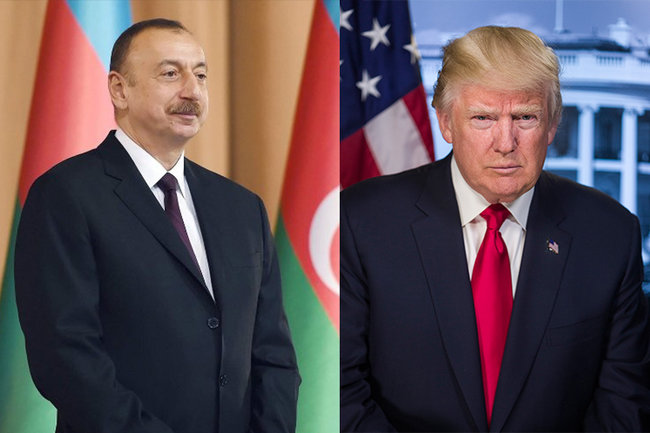
Secondly, and most importantly, Aliyev would never think of a long-term path together with the West. That goes against his interests. A man who seeks lifelong power, why should Aliyev—when only three years remain—enter into agreements with Trump that would leave him dependent on subsequent U.S. governments? Of course, difficult situations and bottlenecks may arise, and to get through them, short-term steps are taken. For instance, you sign a document declaring that you will sign peace, then—before even signing that peace—you nominate Trump for the Nobel Peace Prize. Moreover, while nominating him, you insult the Nobel Committee, saying they “make disgusting decisions.” Then you add: never mind, at least give it to Trump. Isn’t that essentially saying, “don’t mind us, and don’t give the prize to Trump either”? Is it really so hard to see this situation? Obviously, the question is rhetorical.
It was clear that Aliyev was standing there reluctantly, and by highlighting Trump instead of the U.S., he was calculating everything for the next three years, buying time.
What was the likely Trump-Putin deal? Professional military people know that tactics, strategy, and action plans are usually prepared according to the “likely disposition of enemy forces.” It is called “likely” because most of the time the enemy keeps its own information secret. Serious strategists therefore prepare Plans A, B, and C—to make sure nothing comes as a “surprise.” In such matters, as in politics, the only surprises are mines and “traps.” Trump, over Putin’s head, calls Aliyev and Pashinyan, has them immediately sign a document. Before this signing, Trump’s special envoy Whitcoff goes to Moscow, then a week later comes to Baku, and soon after the signing takes place. What’s more, after the signing of the peace agreement between Azerbaijan and Armenia, Trump once again begins calling on Ukraine to make territorial concessions. What do you make of that? Especially when, instead of condemning this agreement, Zakharova supports it with a vague statement.
What could have stopped this process? European countries giving unambiguous support to Ukraine and forcing Trump to back off from the promise he allegedly made to Putin. And that’s exactly what happened. The second part failed. Trump replaced his calls for Ukrainian territorial concessions with the rhetoric of “the aggressor will be counterattacked.” And precisely after that, the first part of the process was also considered void. It was right after this that Iran, saying “the Trump path doesn’t block us,” began to speak up: declaring that it supported peace, but did not want any third country involved. Of course, Iran made this statement under Russian influence—just as it had kept silent under Russian influence before.
Aliyev continues to keep relations with China warm. Because he sees the matter with the West as temporary. His rapprochement with Beijing is also a consolation for Putin—because when Putin faces difficulty, he too seeks to breathe by turning to China. As for India vetoing Azerbaijan’s entry into the SCO and thereby “saving” us—sure, it is not a bad presentation for consolation. But I think what really deserves reflection are these questions: why is Aliyev so eager to join the SCO, and what are the results of the long-running propaganda in all languages of the world—“Aliyev is reforming,” “Aliyev is breaking away from Putin,” “Aliyev is no longer the old Aliyev, but he still can’t be,” “Conflict with Russia is not a game.” Now, the stone thrown from behind doesn’t even hit the ankle.
SEYMUR HAZI